Dalhousie University is moving closer to releasing updated versions of its Sexualized Violence, Discrimination and Harassment policies, and a new standalone Racialized Violence Policy.
On Dec 2, Dal’s Human Rights and Equity Services department within the Office of Equity and Inclusion shared a draft of amendments to the university’s Sexualized Violence Policy with the school community for review and feedback. HRES also opened a survey to gather anonymous student, staff and faculty feedback on current school policies.
The survey, which is open until Jan 10, is meant as “an opportunity to share your views about aspects of the University’s climate and its existing procedures and practices” and as a place for “individuals who identify as racialized or Indigenous to provide insight about their experiences at the University.” It takes roughly 10 minutes to complete.
Dal’s spokesperson confirmed that amendments to the school’s other equity policies on discrimination and harassment “will also be released for consultation during the course of this academic term.”
Dal doesn’t currently have a standalone Racialized Violence Policy. The school’s spokesperson says in an email the policy “is being created in response to specific requests to the university by our community,” including the university’s Senate. The spokesperson writes that “many universities across the country have identified limitations in existing frameworks to proactively engage in matters relating to anti-racism.” This new policy will work together with Dal’s updated Discrimination Policy.
Writes Dal, “it is crucial that our policies are updated to ensure they align with current legal frameworks, principles of administrative fairness and trauma-informed practice.” These updates are “ongoing” and “involve multifaceted approaches including working groups, surveys and robust consultation” with members of Dal’s community, “supported by an external lawyer bringing expertise in employment law, workplace, discrimination and harassment investigations, and restorative justice.”
The Coast has obtained a copy of the drafted Sexualized Violence Policy amendments shared in December and notes that one thing is missing: any mention of ending the use of non-disclosure agreements—NDAs.
In November, The Coast reported that Dalhousie University had quietly updated its sexualized violence website the month before to include a new line: “Dalhousie will not ask a survivor to sign [a non-disclosure agreement] in a sexualized violence case.”
Related

Dal will not ask survivors of sexualized violence to sign NDAs
This additional line of text came weeks after the group Can’t Buy My Silence hosted several events in Halifax. CBMS advocates against the misuse of non-disclosure agreements in cases of sexualized violence, discrimination, harassment and all other forms of misconduct. On Sep 26 at Dalhousie University, one event discussed the CBMS university pledge that commits schools to end NDA misuse in universities—a pledge that Dal has not yet signed.
Related

Challenging universities to stop hiding harassment with NDAs
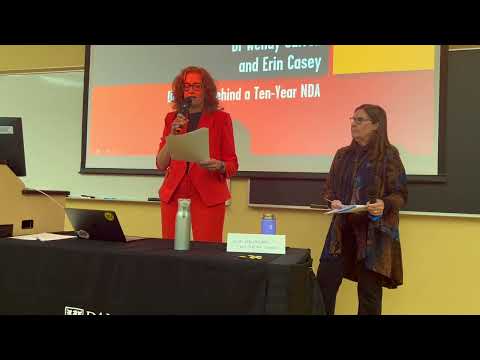
At the event, Lyndsay Anderson, who works for Dal’s HRES, answered an audience question at the very end (although Anderson was not there to speak on behalf of Dal; she was the only member of the administration who attended). She said that Dal was updating its Sexualized Violence Policy and would have something to share soon in response to whether Dal would be signing the CBMS pledge.
The Coast asked Dal in October whether its new Sexualized Violence Policy would include the updated line about not asking survivors to sign NDAs and whether it would be signing the CBMS’ university pledge, which states a school commitment “to not using Non-Disclosure Agreements to silence people who come forward to raise complaints of sexual harassment, discrimination, abuse or misconduct, or other forms of harassment and bullying.”
Dal did not answer the question in October, but a spokesperson wrote back that the school is “very familiar” with CBMS and “greatly appreciates and respects the work that they are doing around NDAs. Their efforts prompted us to review our own policies, which led to the update you’ve referenced.”
The spokesperson also wrote that Dal has “communicated to affected individuals that existing NDAs will no longer be enforced by Dalhousie with respect to past cases involving sexualized violence,” meaning people under these previous NDAs, which would otherwise last forever, had been released and could now tell friends and family what had happened without fear of repercussions.
The spokesperson wrote that the university “takes our responsibility to assist and support those who experience sexualized violence, harassment, discrimination, and other forms of misconduct seriously” and directed The Coast to the school’s current policies, which are in the process of being revamped.

On Tuesday, The Coast asked Dal whether the amended Sexualized Violence policy will end NDA misuse, and this was, again, left unanswered.
Kristina Fifield is a trauma therapist who specializes in gender-based violence and leads NDA-informed workshops as part of the CBMS team. Fifield and others have been advocating for Nova Scotia to pass legislation, including the NDP’s Bill 14,4, to end the misuse of NDAs province-wide.
Related

How NDAs are perpetuating a culture of gender-based violence
“It’s a critical time right now for Dalhousie to take a leadership role in making the necessary changes within the university as part of the cultural shift that’s needed,” Fifield tells The Coast Tuesday. “That needs to be reflected in their policy around NDAs and how they’re not going to use them in, not just sexual violence cases but in cases of harassment, discrimination and racism, too.”
Fifield says CBMS has shared plenty of feedback with Dal on how to reflect this cultural shift in their equity policies and hopes the final draft of Dal’s amended Sexualized Violence Policy will mention NDAs and extend the website’s updated line about not asking survivors of sexualized violence to sign these agreements, which CBMS call “gag orders,” to saying they will not be used in these cases, period.
Fifield says Tuesday that even if “Dal might not ask for them but—especially for unionized workers in grievance processes they’re trying to settle with their unions who are telling them they’re only going to get financial damages if there’s an NDA— it doesn’t mean they’re not going to use them.”
Ultimately, says Fifield, Dal has still not signed the CBMS pledge or provided any update to the change made to its sexualized violence website. What’s more, this added line only pertains to sexualized violence, which she says is “highly problematic when you’re looking at other forms of violence, racism and discrimination that are taking place within a university.”
Asks Fifield, “since the update, has there been any training or any conversations with their leadership teams around this? With their legal counsel? That’s why policy is so necessary.”
Says Fifield, these policies should include:
- Unambiguous language that Dal will not use NDAs in any abuse cases, including harassment, violence and sexual violence.
- Commitment that Dal will inform survivors about one-sided confidentiality agreements that can be used in place of NDAs to protect their identity.
- Accountability from Dal, in the form of an apology to survivors or an acknowledgement of previous and ongoing harms NDAs cause, including cultures of silence and continued violence.
- Clear procedures for holding those who perpetuate violence accountable, including acknowledging that these issues don’t exist in a vacuum and should be considered to affect the safety of the entire school community.
“The problem,” says Fifield, “is that too often sexual violence is looked at as isolated incidents and that there’s no harm or risk to anyone else—and that’s simply not the case. You don’t have to look far to see that’s not the case either,” says Fifield, pointing to ex-University of King’s College and Dal professor Wayne Hankey, who displayed a “pattern of predatory and abusive behaviour” while at the university, according to a report commissioned by UKing’s and who died a month before he was due to stand trial in 2022 for multiple historical sexual offences.
Or to the perpetrator of the mass casualty events in Nova Scotia, who “had a long history of sexually assaulting and sexually exploiting vulnerable and marginalized people,” says Fifield. “These are not isolated incidents and it’s a problem not to see these as public safety issues.”
Says Fifield, “that’s the cultural shift that needs to be included in these policy updates because the university does have a responsibility to investigate individuals using different forms of violence.”
Fifield says Dal “needs to be a leader and make it very clear to individuals who are using violence, racism or discrimination, sexual harassment or sexual violence, that the university is changing the culture.
“It’s addressing the systemic issues that have existed within the institution over a long period, and that part of this cultural shift is ensuring that [NDAs] are not going to be used in these abusive ways moving forward. That’s giving a clear message to individuals who are using violence and to survivors and individuals who have been impacted that they’re no longer going to be silenced and that Dal is no longer going to be part of this complicity culture of silencing survivors and victims of different forms of violence and protecting perpetrators.”
Related Stories
Dal will not ask survivors of sexualized violence to sign NDAs
How NDAs are perpetuating a culture of gender-based violence
Challenging universities to stop hiding harassment with NDAs
This article appears in Dec 19, 2024 – Jan 31, 2025.